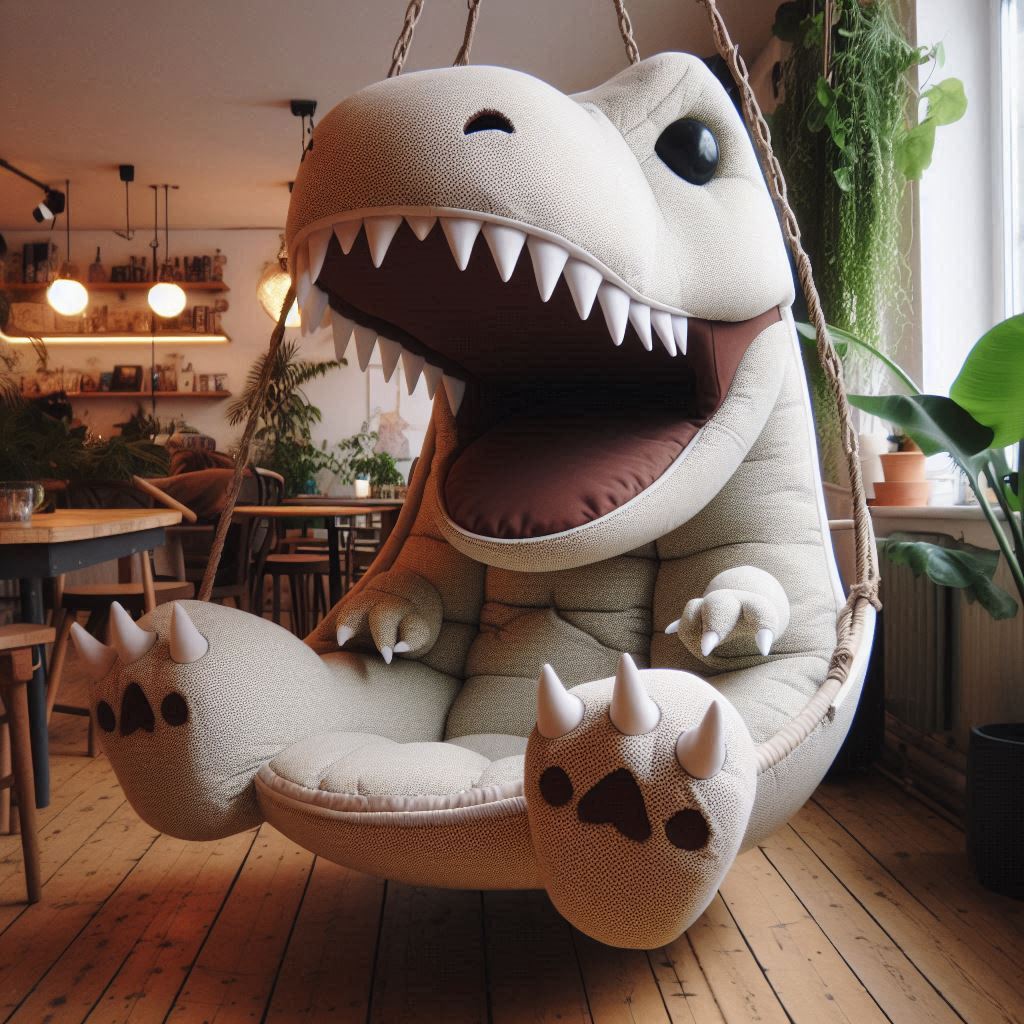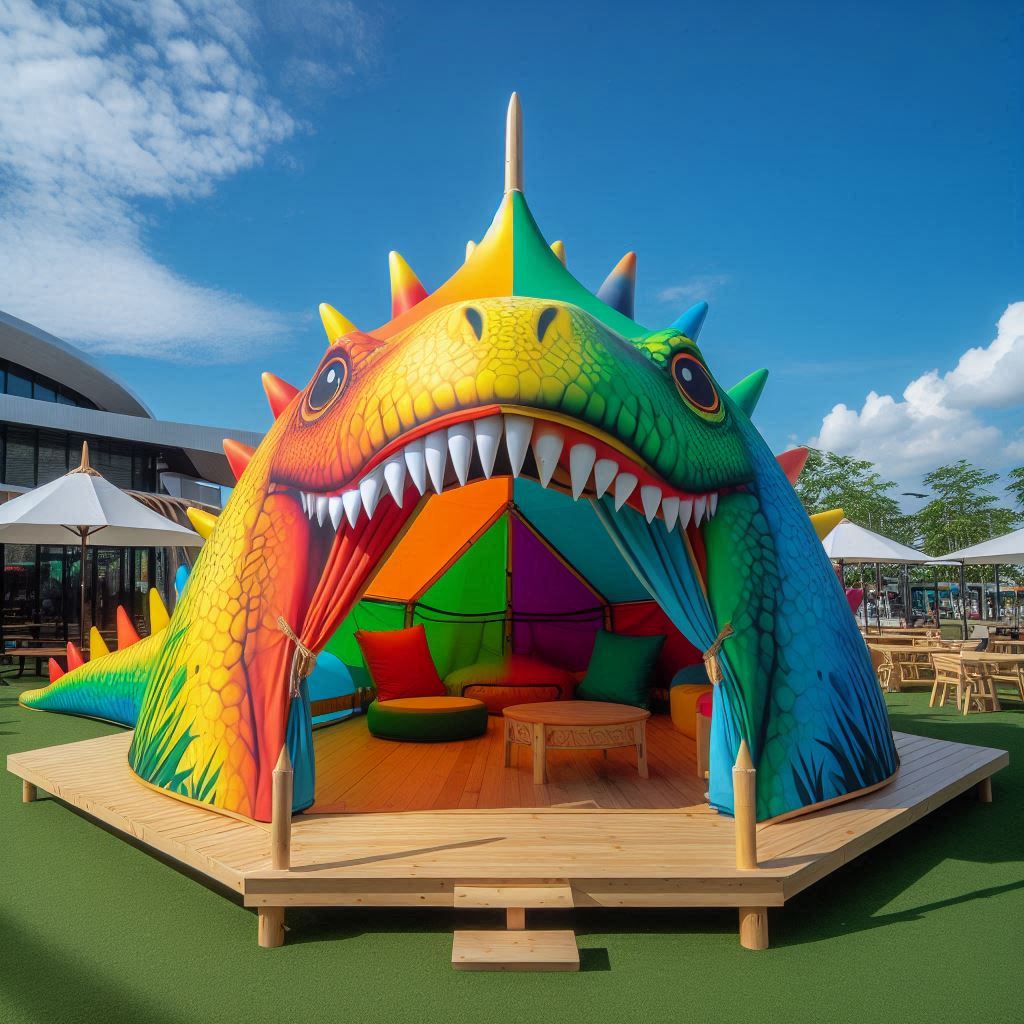

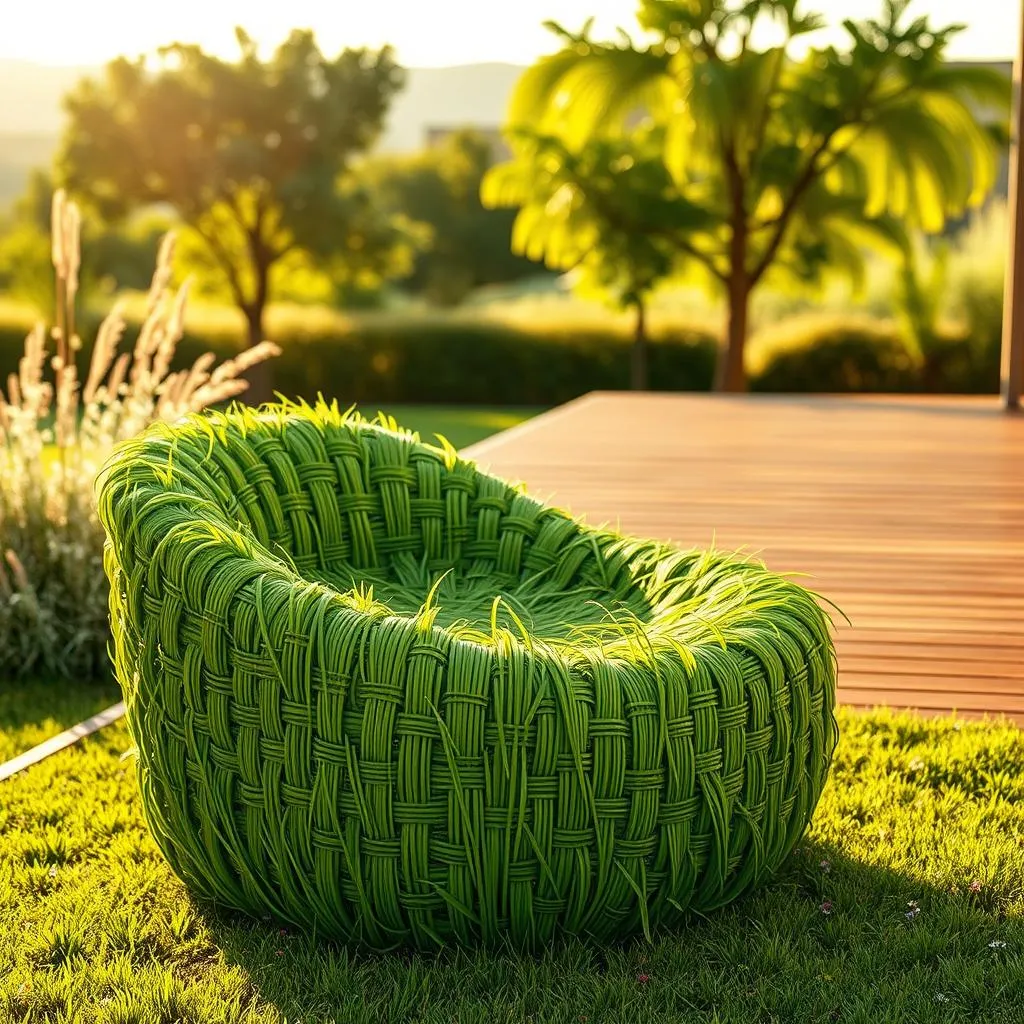
This 2025 guide from Idea Create Zone reviews the best grass chair concepts for modern outdoor living. It focuses on practical product reviews and comparisons of grass lawn chair types such as cardboard, foam, woven, and synthetic turf. This way, readers can find outdoor seating that matches their needs. We evaluate style, materials, durability, and eco-credentials to help you choose sustainable furniture for yards, patios, and balconies. The piece highlights green grass chair options like grass lounge chair and grass couch chair designs. It also includes performance-tested grass foam chair alternatives.
Target readers include homeowners, renters with balconies, landscape designers, and eco-conscious shoppers across the United States. Expect clear buying tips, care and maintenance advice, retailer spotlights, and DIY ideas. These will make outdoor furniture choices simple and smart.
Why Grass Chairs Are Trending for 2025 Outdoor Living
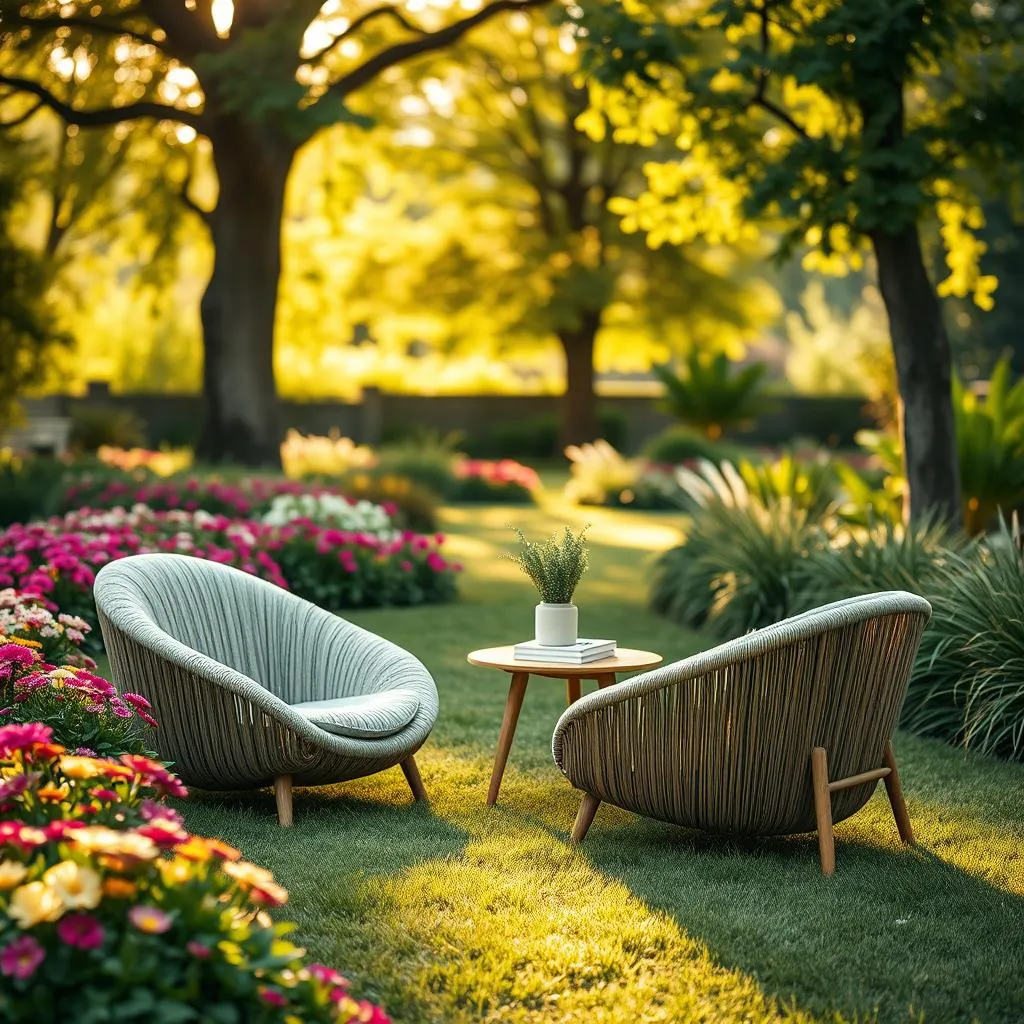
Today, people want products that are good for the planet and feel good to use. Brands like IKEA and West Elm now offer sustainable furniture options. This shift makes grass chairs a perfect choice for modern outdoor spaces. Designs that bring nature indoors and flexible patio setups are key. People look for lawn chairs, lounge chairs, and couch chairs that fit small spaces or big decks. Garden seating trends include weather-resistant materials, easy storage, and quick setup for any yard size.
Grass-covered chairs offer many benefits for relaxing in your backyard. They blend with plants and create peaceful outdoor areas. Plus, they stay cool on warm days without the need for heavy cushions. There’s a green story behind these stylish chairs. Choosing eco-friendly seating made from recycled or renewable materials is better for the planet. It meets the need for practical, guilt-free outdoor living.
Designers focus on what matters most: durability, a pleasant feel, and styles that match existing garden decor. This leads to a variety of grass chair designs that cater to real needs in 2025.
What Defines a Modern Grass Chair
Modern grass seating combines texture, function, and durability for outdoor living in 2025. Designers choose materials that are both comfortable and weather-resistant. They aim to create pieces that look great in a garden and can handle sun, rain, and frequent use.
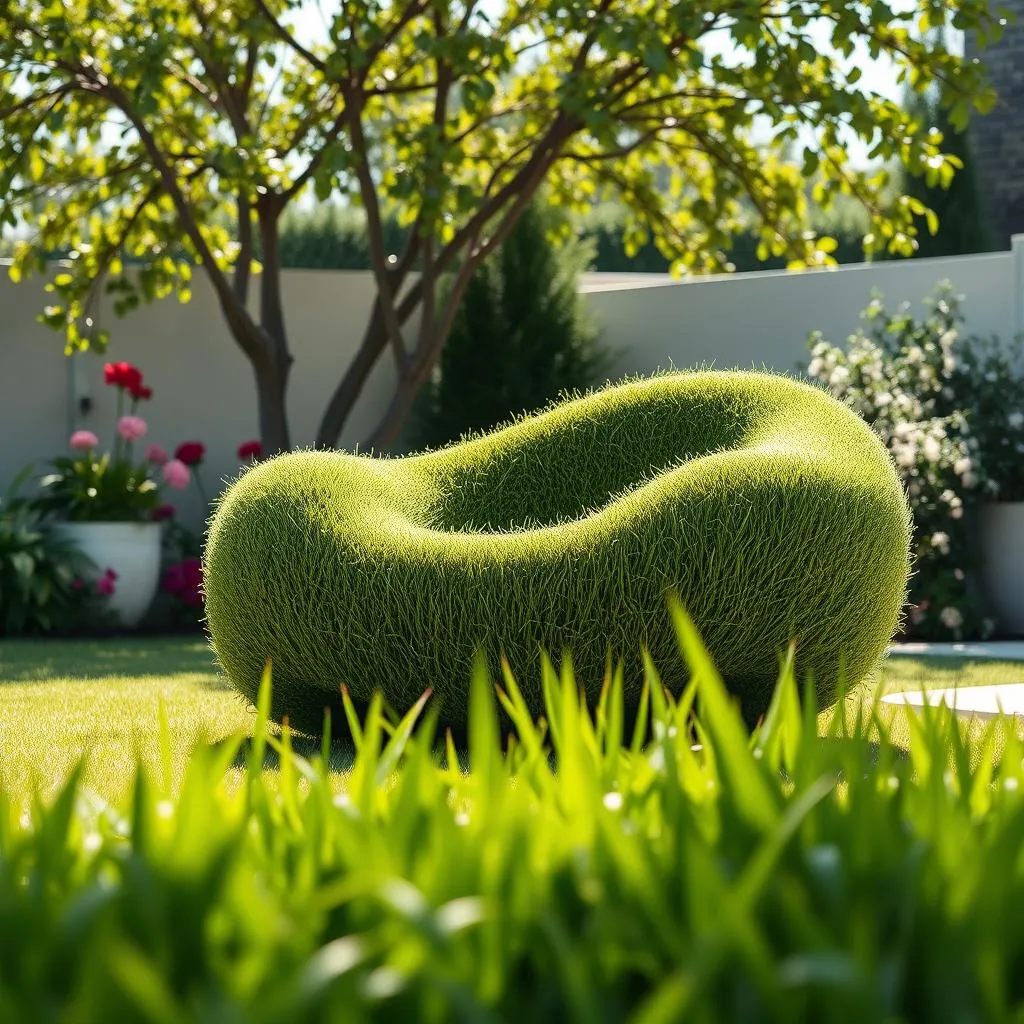
Materials: turf, synthetic grass, woven natural fibers, and foam options
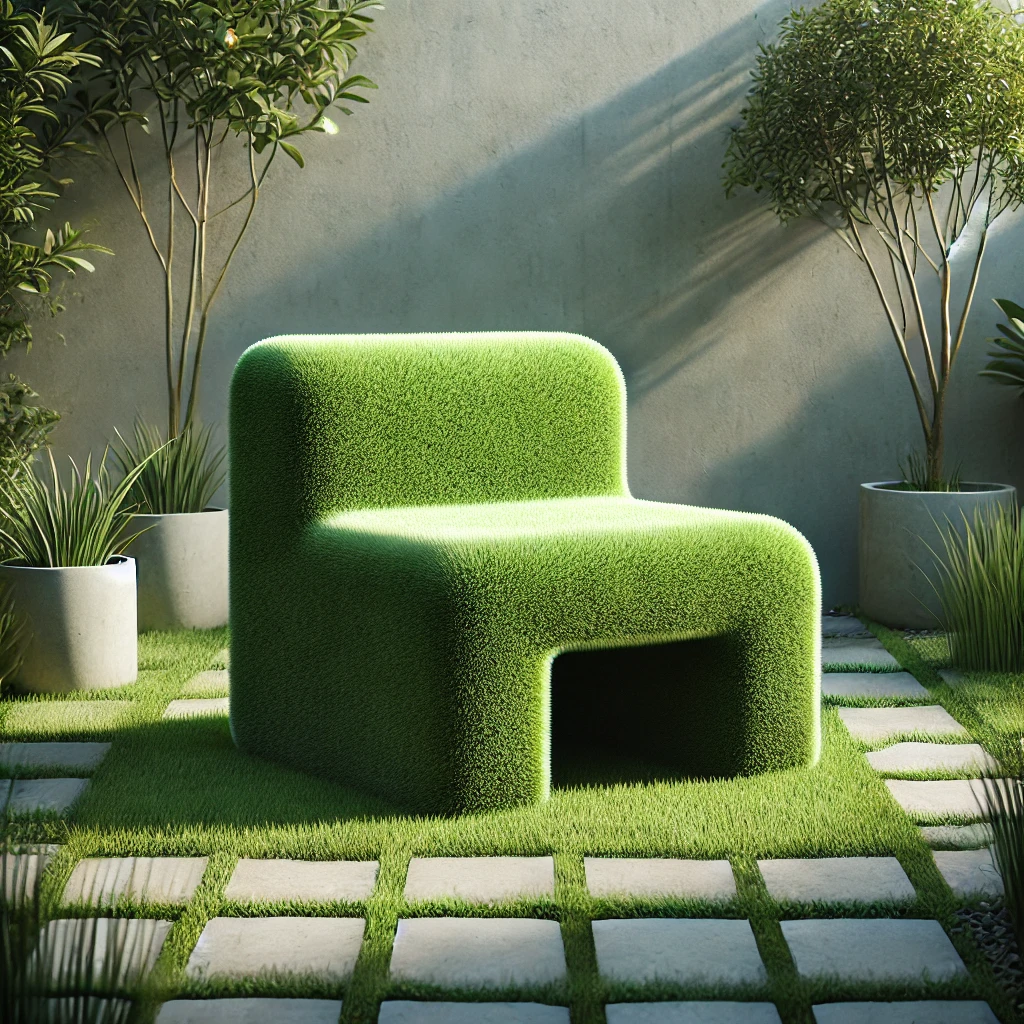
- Synthetic turf, made from polyethylene and polypropylene, is popular for its low maintenance. Preserved natural grass overlays add a real grass feel without the upkeep.
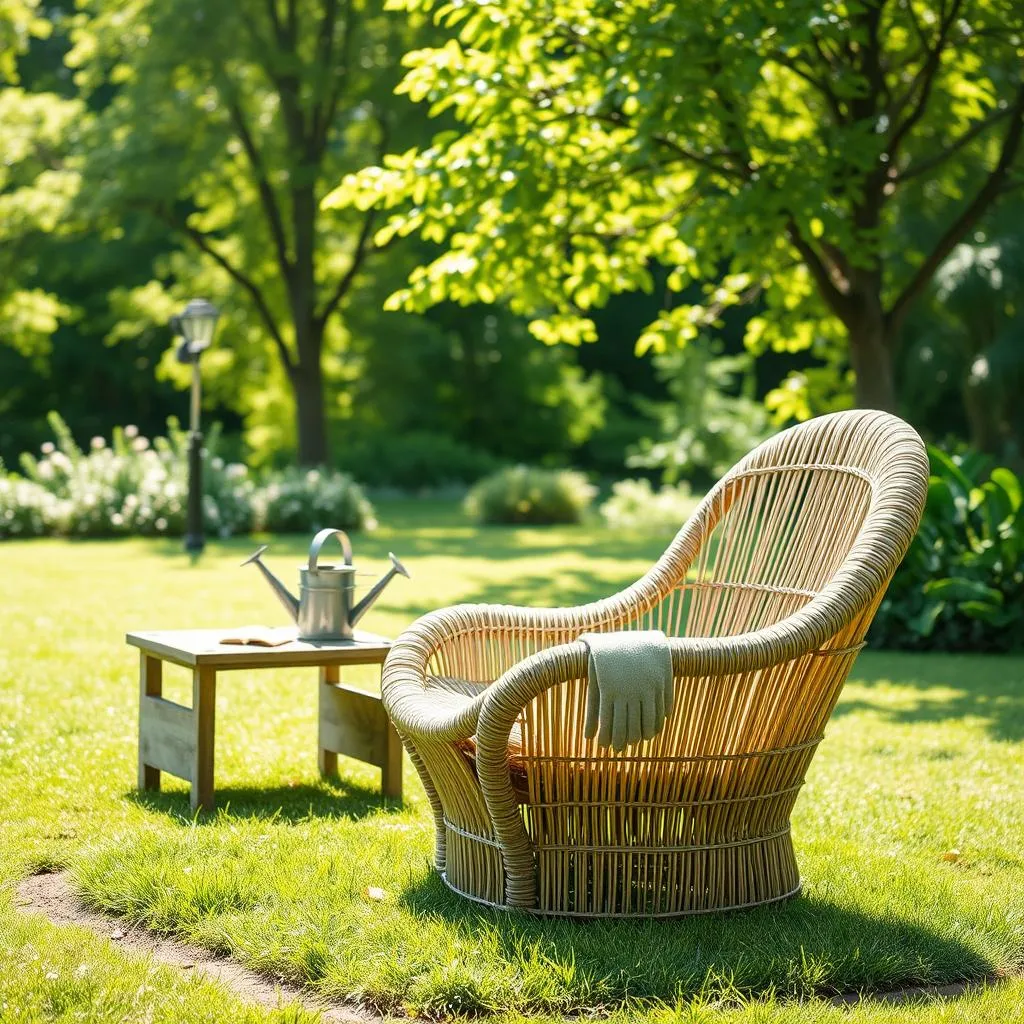
- Woven natural fibers like seagrass and rattan offer a green finish that looks like lawn. They are lightweight and perfect for patios. The grass woven chair style adds an artisan touch.
- Foam cores covered in turf make seating soft and cushioned. These grass foam chairs are comfortable and dry quickly. Cardboard grass chairs use turf covers on corrugated board for a budget-friendly option.
Design elements: ergonomics, modularity, and weather resistance
- Ergonomic design is key: chairs have curved backs, lumbar support, and angled seats. These features make sitting more comfortable for longer periods.
- Modular systems allow for easy setup of sectional grass couch chairs. You can snap chairs together or place them side by side. This makes it easy to create social seating areas that can be rearranged or stored.
- Weatherproofing involves UV-stable fibers, mildew-resistant adhesives, and quick-drain foam. Frames are made from aluminum or treated wood to resist corrosion and maintain a clean look outdoors.
Style variations: lounge, couch chair, and compact lawn chair formats
- Compact grass lawn chairs are perfect for small spaces like balconies and patios. They are designed to be portable and space-efficient while keeping a green look.
- Grass lounge chairs focus on comfort with deeper seats and reclined profiles. They are great for sunbathing and reading. The turf tops and foam cores add comfort without losing the outdoor feel.
- Grass couch chairs and daybeds are statement pieces for decks and large terraces. They offer comfort and presence, creating social hubs that anchor an outdoor room.
Grass Chair: Signature Styles and Popular Shapes
Designers have taken the grass chair idea in three main directions. Each direction meets different outdoor seating needs. They balance comfort, weather resistance, and a playful turf look, keeping garden decor fresh.
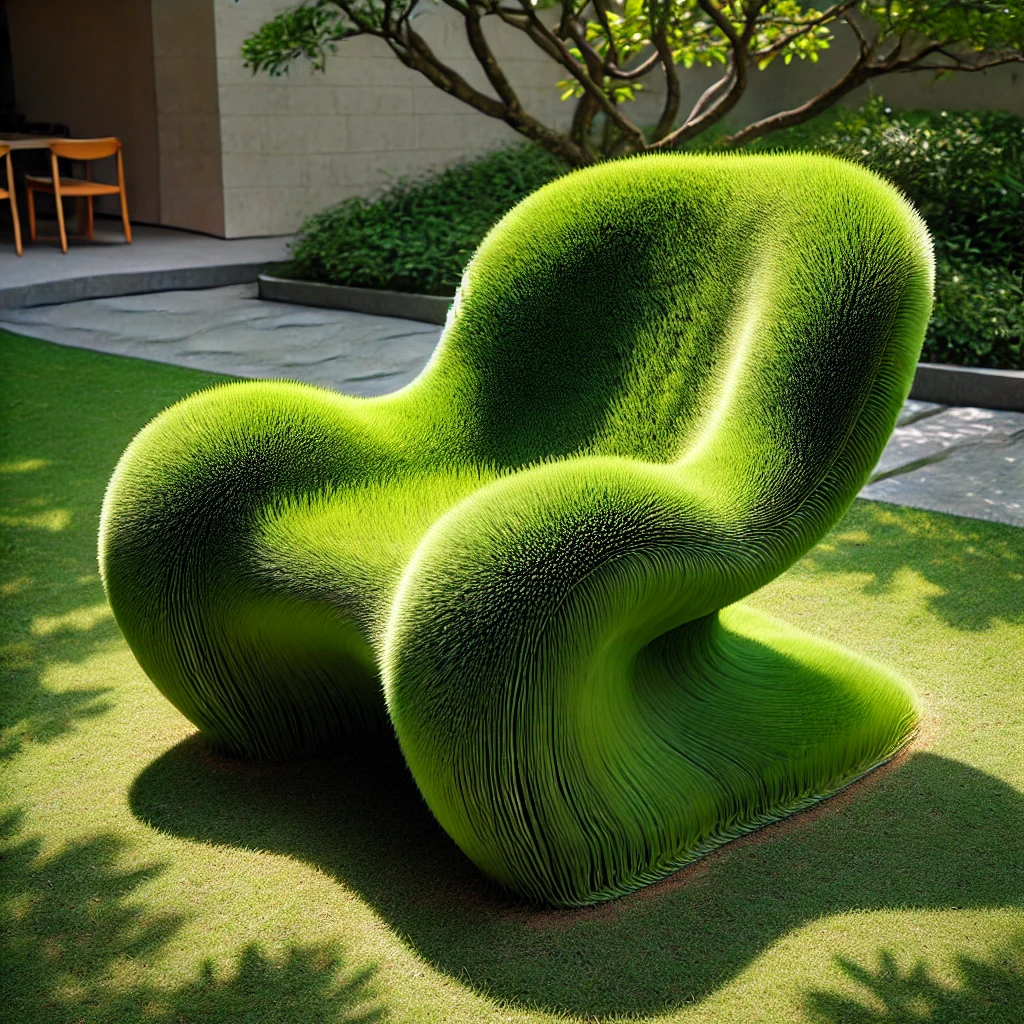
Classic reinterpretations
Folding frames and sling-style seats are modern twists on outdoor chairs. Brands like Fermob and West Elm use turf-like upholstery. These designs offer a lawn look while being portable for various uses.
Low-profile lounge designs
Chaise-style and recliners have been made into low-profile grass lounge chairs. They fit well on patios and pool edges. These chairs use breathable materials to work well in hot, wet weather.
Curved and sculptural options
Molded chairs and sectionals create eye-catching spots on big decks. Kettal and Dedon use grass finishes on aluminum or composite frames. These chairs are conversation starters and durable pieces of art.
Sustainable Materials Used in Grass Chairs
Designers are now using long-lasting synthetics and responsibly sourced fibers for outdoor seating. The choice of materials impacts comfort, weather resistance, and how the chair is recycled at the end of its life. This is key for a sustainable garden chair or an eco-friendly chair for patios and decks.
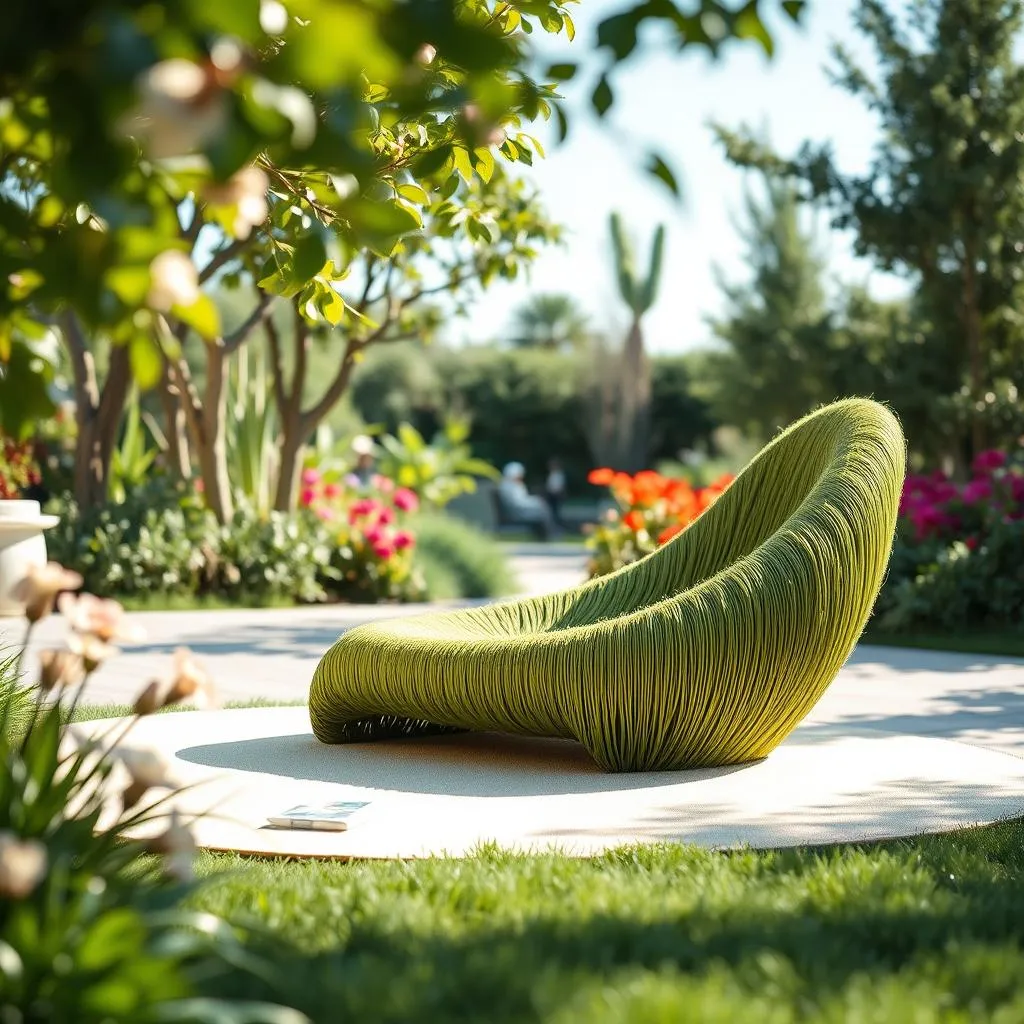
Recycled plastics are a top pick for turf-style surfaces. They use PET and HDPE fibers from recycled bottles to mimic real grass. The use of low-VOC binders and reduced-dye processes also helps reduce chemical use. Brands that use recycled plastics help lower the demand for new plastics and support a circular economy.
Natural materials offer a balance to this approach. Seagrass, jute, rattan, and FSC-certified wood are great for frames and seats. They use plant-based preservatives and borate treatments to extend life while remaining biodegradable. This makes natural materials a favorite for those who prefer a soft look and a lighter environmental impact.
Choosing between natural fibers and synthetic turf involves trade-offs. Natural materials feel warm and can compost, but they need more care and may not last as long in the sun. On the other hand, recycled plastics resist rot and dry quickly, but they need recycling systems to be fully sustainable.
New innovations in cores and inserts improve long-term performance. Closed-cell PU foam resists water, dries fast, and often has antimicrobial finishes for cleanliness. Inserts now use recycled ocean plastics or natural latex for better durability. The choice of core affects comfort, weight, and recyclability, making eco-friendly chairs more promising.
For a true eco-friendly upgrade, mixing recycled plastics surfaces with FSC wood frames and bio-based cores is best. This combination supports durability and reduces the environmental impact of a grasse chair. It offers a modern, sustainable garden chair that lasts for many seasons. For indoor extensions of your natural theme, consider a mushroom inspired bed that uses similar eco-fibers.
Innovative Construction Techniques for Durability
Durable outdoor seating combines smart materials with careful assembly. Designers are making grass-covered chairs as tough as marine gear. They use advanced surface treatments and strong structures to keep them looking good in sun and rain.
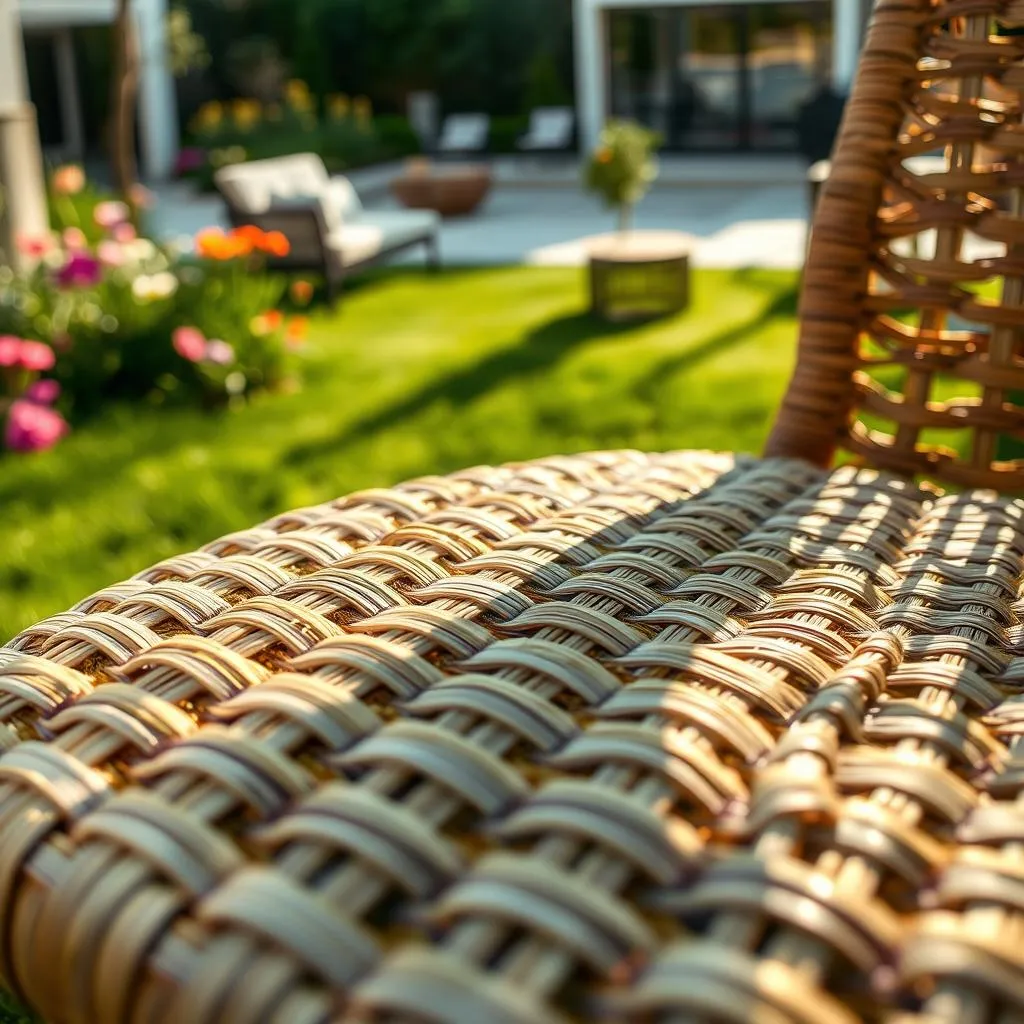
Protecting the surface starts with the turf. Manufacturers add UV inhibitors to fibers and apply hydrophobic coatings to repel water. Sealed tufting and heat-bonded seams prevent moisture from getting in. Marine-grade adhesives keep layers together, improving waterproofing and performance.
Frames need to be light, strong, and eco-friendly. Powder-coated aluminum is rust-resistant and feels light. FSC-certified hardwoods with marine varnish add warmth and are sustainably sourced. Composite frames are strong, recyclable, and meet safety standards.
Making furniture easy to maintain extends its life and cuts down on waste. Modular upholstery panels and replaceable turf covers let owners update without throwing away the whole piece. Patch kits for turf and foam repairs fix small issues before they get big. The trend is moving toward parts that can be easily swapped out, part of a broader push for sustainable outdoor furniture.
Top Grass Chair Designs to Consider in 2025
Check out the latest in outdoor seating that’s comfy, stylish, and good for the planet. We’ve got the best models, small chairs for tight spots, and bold pieces that make decks and pool areas stand out.
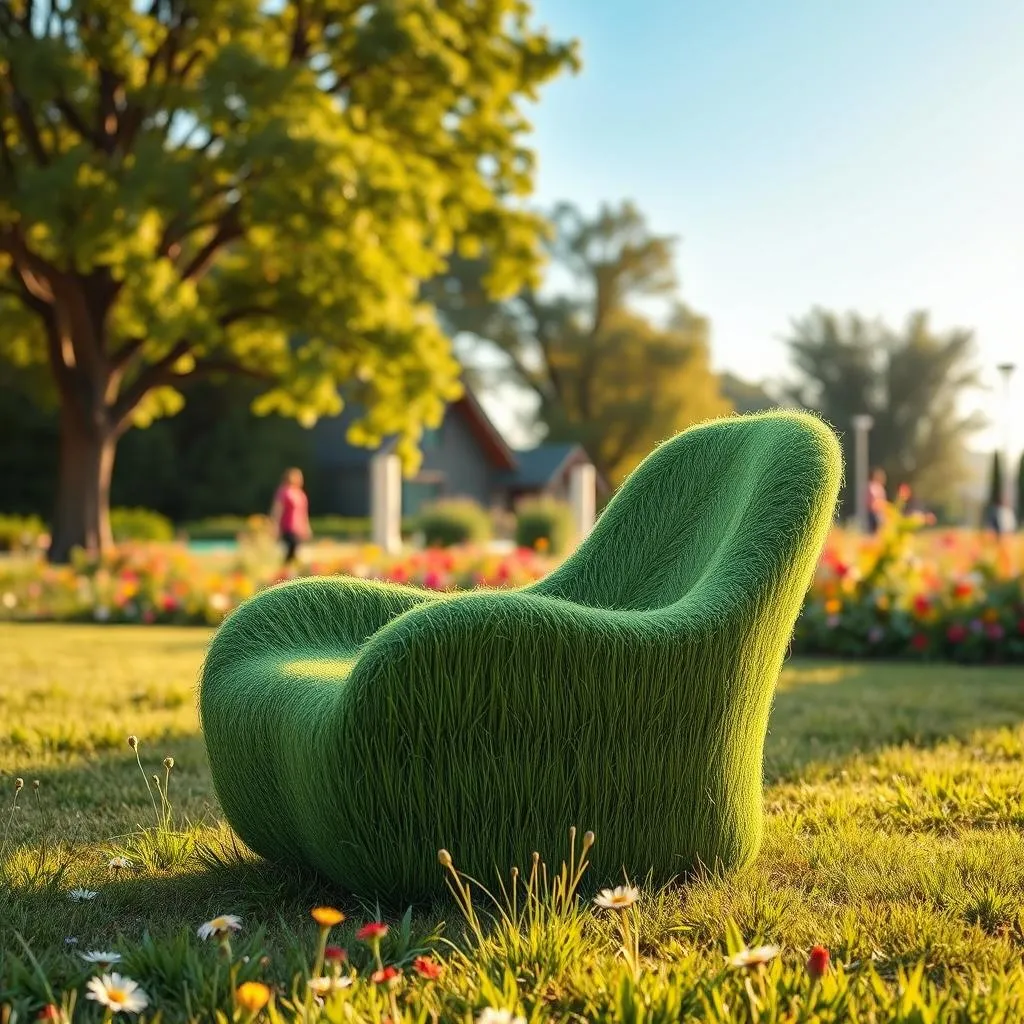
Spotlight on bestselling outdoor seating models
Crate & Barrel and West Elm are at the top with their turf chairs. They offer modern looks and feel natural. Prices range from $199 to $899, based on size and material. These top picks use synthetic turf and frames made from aluminum or wood. They come with warranties of one to five years. People love how comfy and weather-resistant they are. Brands like Fermob and Article use eco-friendly materials.
Designs for small spaces and balcony-friendly grass chairs
For small areas, there are foldable grass chairs and slim lounge seats. These chairs are light and easy to move. You can also find stackable stools that are perfect for saving space. These chairs are great for balconies, tiny patios, and city rooftops. They’re made to dry quickly and have light frames and rubber feet. They’re perfect for enjoying your morning coffee or reading in the evening.
Statement pieces: oversized grass couch chair and daybeds
For a big impact, check out the oversized grass couch chairs and plush daybeds. They give your outdoor area a resort feel. Sectional sofas are big and can be rearranged for different layouts. Daybeds with canopies offer shade and weatherproof cushions. To keep them looking good, brush the turf, clean spots, and remove cushions in storms. These pieces make a statement and turn your outdoor area into a highlight.
|
Model Type |
Typical Dimensions | Weight | Price Range |
Best Use |
| Foldable grass lawn chair |
28″ H x 22″ W x 24″ D |
8–10 lbs |
$199–$299 |
Balconies, small patios |
| Stackable turf stool |
16″ H x 14″ Ø |
6–8 lbs |
$79–$149 |
Extra seating, compact storage |
| Slim-profile grass lounge |
30″ H x 28″ W x 36″ D |
18–25 lbs |
$249–$499 |
Balcony-friendly lounging |
| Oversized grass couch chair |
60″–90″ W |
60–120 lbs |
$799–$1,999 |
Decks, poolside statement |
| Plush turf daybed with canopy |
80″ L x 40″ W |
80–140 lbs |
$899–$2,500 |
Resort feel, shaded lounging |
Eco-Friendly Features to Look for in a Grass Chair
Choosing a grass chair means blending style with responsibility. Look for pieces that carry clear proofs of low impact and long-term value. The right features help you enjoy green living furniture while avoiding common sustainability pitfalls.
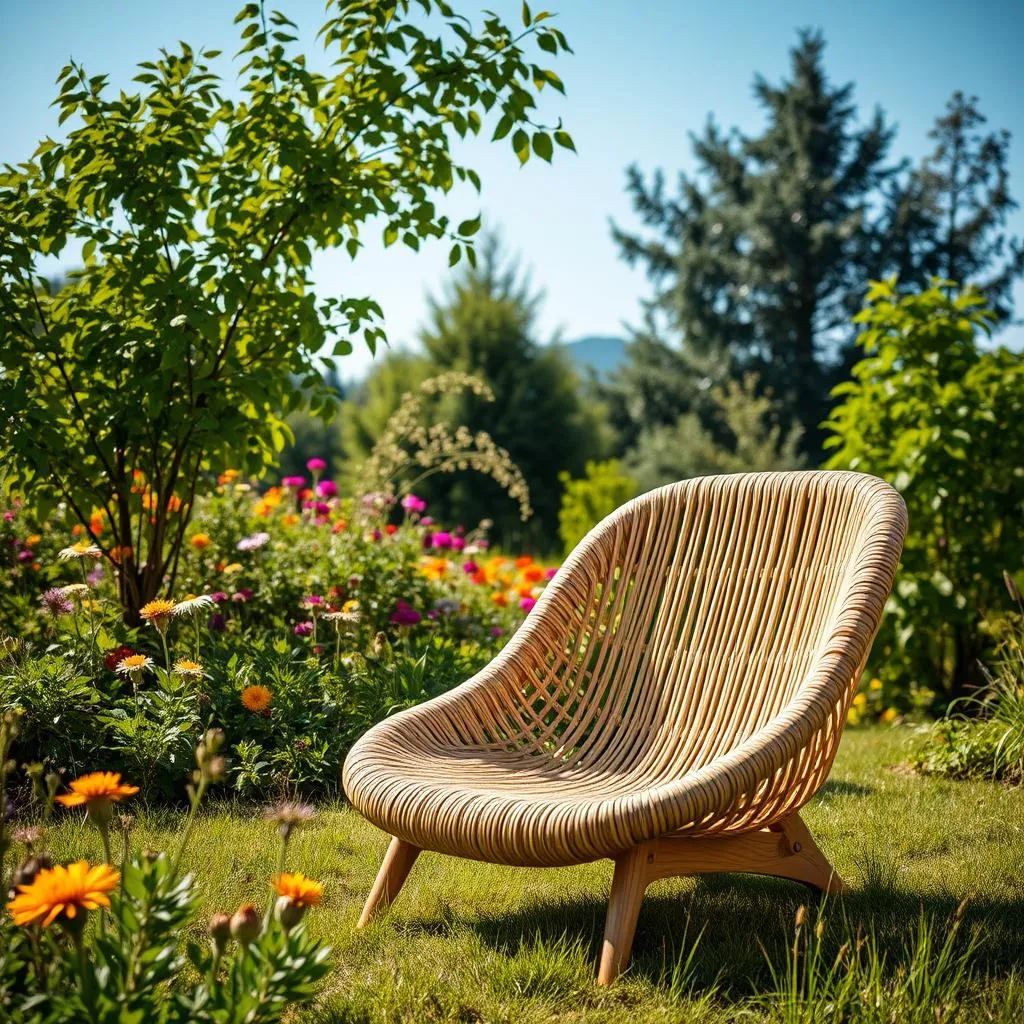
Certifications and sustainable furniture labels
Seek independent marks that verify materials and processes. The Forest Stewardship Council (FSC) confirms responsibly harvested wood. GREENGUARD signals low chemical emissions for healthier indoor or covered outdoor use. Global Recycled Standard (GRS) certifies recycled textiles and reclaim streams. Cradle to Cradle Bronze or Silver rates products for material health, circularity, and reuse.
These certifications give buyers assurance when shopping for eco-friendly furniture and sustainable furniture options.
Low-impact manufacturing and transport considerations
Manufacturing matters as much as materials. Favor makers who use renewable energy in factories and publish supply-chain reporting. Local production cuts mileage and supports regional jobs. Flat-pack or compressed shipping lowers transport emissions and protects turf and foam during transit. Transparency in sourcing reduces hidden costs linked to waste and long-haul freight, making the item a smarter eco-friendly furniture choice.
End-of-life: recyclability and compostable components
Plan for what happens after years of use. Chairs designed for easy disassembly let recyclers separate metal frames, foam cores, and turf surfaces. Untreated wood and natural fibers like jute can be composted or returned to soil systems.
Brands such as West Elm and IKEA run take-back or refurbishment programs that extend product life and reduce landfill waste. Prioritize recyclable parts and clear recyclability claims when evaluating green living furniture.
Use this checklist when shopping: verified certifications, local or low-impact manufacturing, and designs that prioritize disassembly and material recovery. These features create grass chairs that fit your yard and support broader goals for sustainable furniture. Complement outdoor seating with a sunflower shaped bed for a cohesive biophilic indoor-outdoor flow.
How to Choose the Right Grass Chair for Your Backyard
Choosing a grass-style seat is easy. First, measure your patio or yard. Then, think about how you’ll use it for lounging, dining, or as a decorative piece. A small chair fits well in tight spaces, while a big one can be a centerpiece for larger areas.
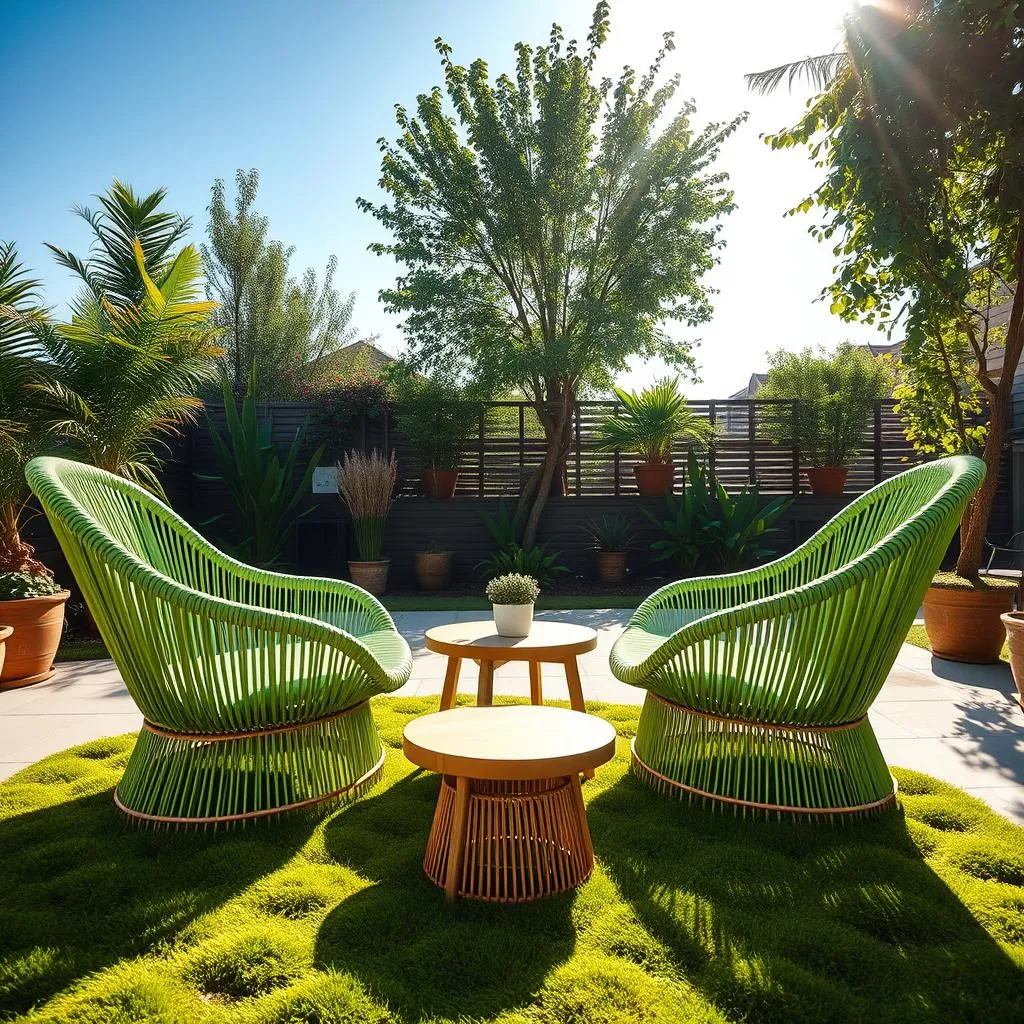
Matching style to layout and outdoor living essentials
Make sure the chair size matches your furniture. Keep paths clear for fun gatherings. Consider adding side tables and umbrellas to your setup. If you have outdoor dining sets from Pottery Barn or West Elm, find a chair that complements them. For yards that do many things, choose modular pieces. They’re great for moving around and enjoying the sun.
Comfort considerations: cushioning, height, and support
Before buying, check the seat’s depth, angle, and height. It should be easy to stand up from, for everyone’s comfort. Opt for cushions that are quick to dry and feel just right. Look for built-in back support or add a cushion for better posture. Try chairs in stores if you can. Online, check sizes and return policies at places like Crate & Barrel or Wayfair. Make sure the covers are easy to wash and remove.
Durability factors for different climates across the United States
In sunny places like California, choose turf and frames that won’t fade. For Florida’s salty air, pick frames and hardware that resist corrosion. In humid areas like the Southeast, go for fabrics that don’t mold and chairs with drainage. For cold Midwest winters, find chairs with covers and easy storage. A natural material chair can work in many places if it’s treated right.
|
Region |
Key Concerns |
Recommended Features |
| California coast | Strong sun, salt air | UV-stable turf, powder-coated aluminum frame, quick-dry cushions |
| Florida & Gulf Coast | Humidity, salt corrosion | Marine-grade hardware, mold-resistant fabrics, drainage channels |
| Midwest | Freezing winters, snow | Insulated covers, removable cushions, easy storage design |
| Pacific Northwest | Frequent rain, dampness | Waterproof seams, rot-resistant frames, quick-drain cushions |
Grass Chair Care and Maintenance Tips
Proper care of grass chairs keeps them fresh for many seasons. Follow simple routines for cleaning, storing, and small repairs. These steps help maintain your outdoor seating and keep warranties valid.
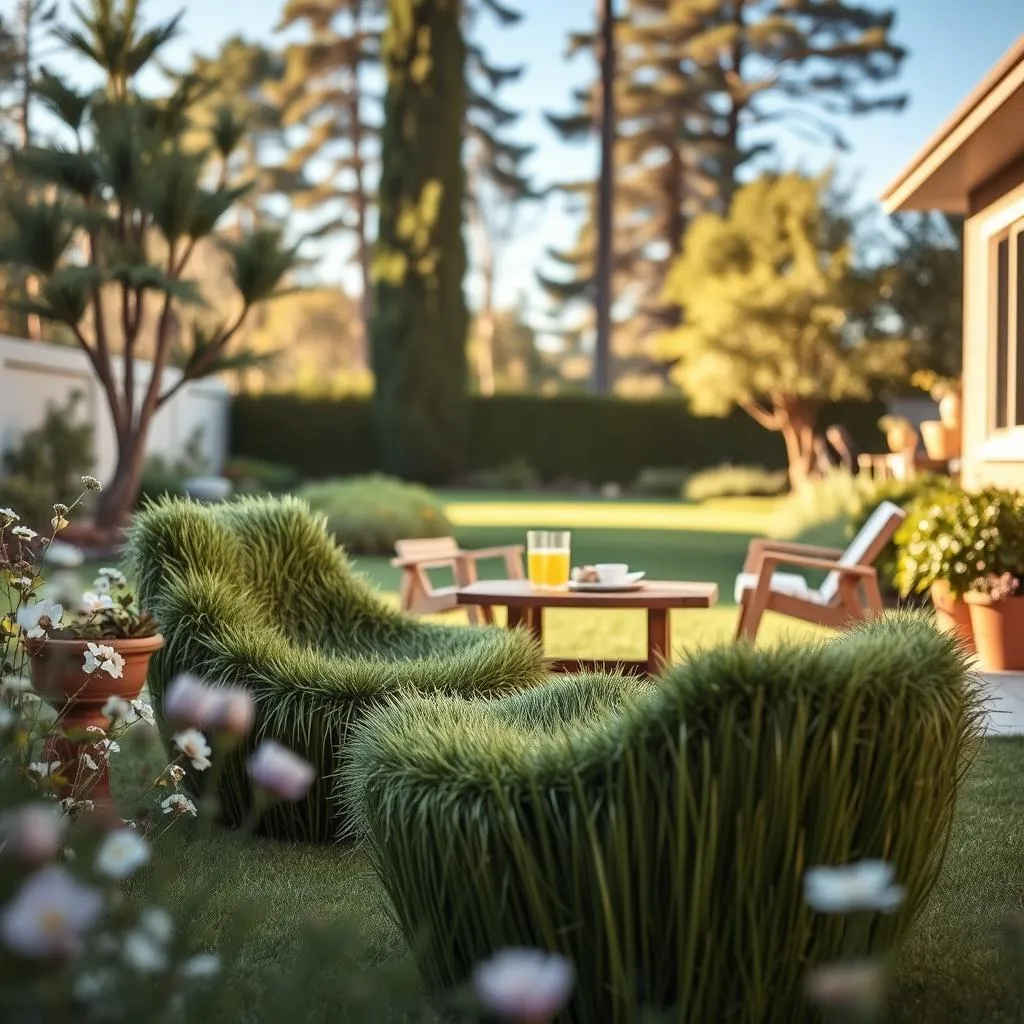
Cleaning turf surfaces
- Start by brushing off loose debris with a stiff broom or leaf blower. Light use requires weekly brushing, while heavy use needs twice a week.
- Rinse with a garden hose on low pressure to avoid damaging the turf. Mix mild dish soap with water for cleaning. Rinse well to remove all soap residue.
- For organic stains, use an enzymatic cleaner safe for synthetic grass. Always test any cleaner on a hidden area first. Avoid using bleach on colored turf as it can fade and damage the backing.
Storing and protecting chairs
Use breathable covers to protect from moisture while allowing air to circulate. Store lightweight pieces in a dry place during winter to prevent mildew and frost damage. Keep chairs off wet ground on pallets or shelving to prevent water damage. Remove cushions or quick-dry inserts before storage. Let them air out completely to avoid mold.
Repair techniques for common constructions
Be gentle with cardboard-based chairs. Reinforce seams with waterproof tape and add recycled plywood panels to strengthen load points. Always follow the manufacturer’s instructions to keep warranties valid. For foam chairs, use closed-cell foam inserts for small repairs or replace worn cushions with new foam pads. Dry foam completely after rain and use covers when storing.
If turf covers wear out, replace the top layer or use adhesive turf repair patches on seams. If unsure, check the brand manual or contact customer service for help. Keep a maintenance kit handy: soft brush, mild soap, enzymatic cleaner, waterproof tape, adhesive turf patches, and spare foam inserts. Regular care reduces major repairs and supports long-term maintenance.
DIY and Budget-Friendly Grass Chair Ideas
Small projects can refresh a patio without a big cost. Here are some ideas for a cardboard grass chair, upcycled outdoor seating, and a grass lounge chair using turf remnants and cushions.
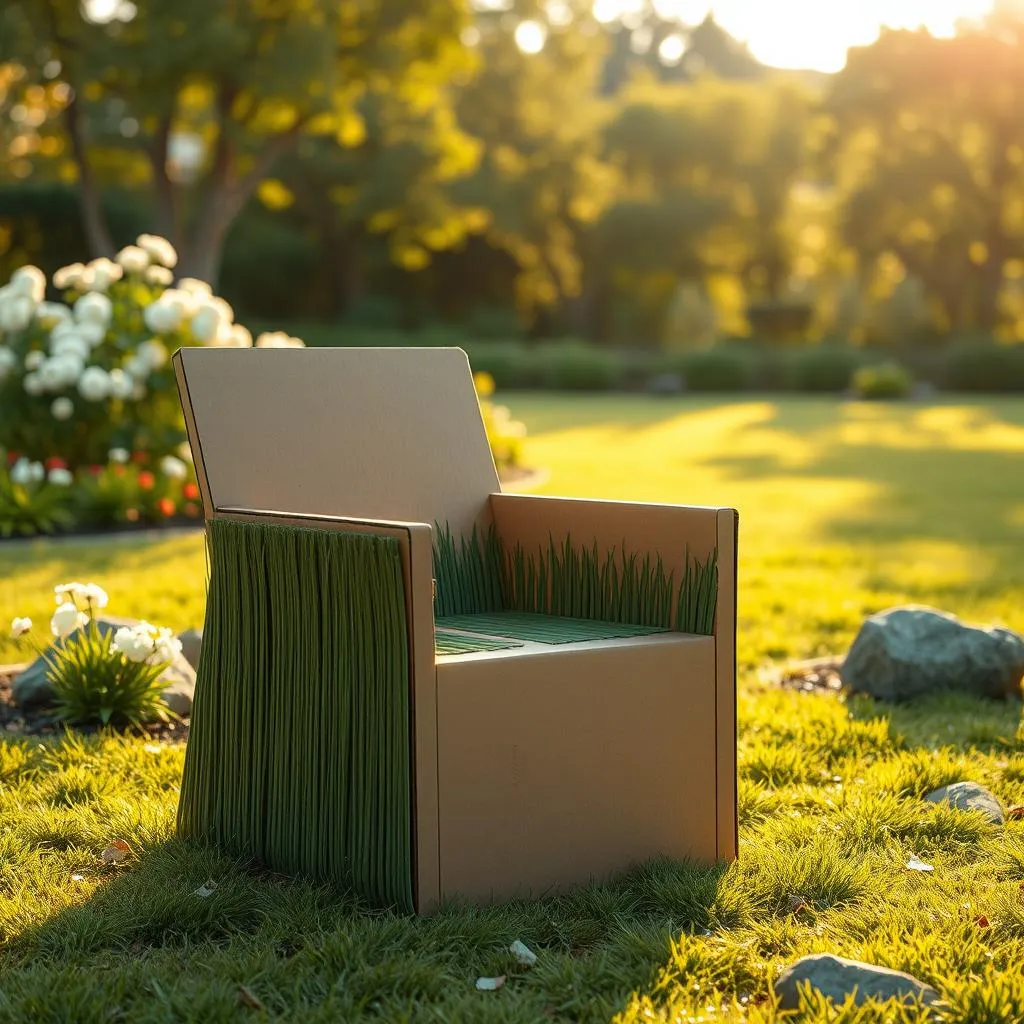
When starting a DIY grass chair project, make a clear plan. Consider the weight, weather, and where it will go. Cardboard is best for covered porches or seasonal use, not for constant outdoor use.
Building a sturdy cardboard chair
Here’s what you need:
- Heavy-duty double-wall corrugated board
- Outdoor-rated adhesive like Gorilla Glue Clear or construction adhesive
- Synthetic turf remnant for the seat and back
- Waterproof sealant for exposed edges
- Utility knife, straightedge, clamps, and a ruler
Start with a basic pattern: cut two side panels with notches, a layered seat, and a back support. Fold and glue layers for strength. Add glued inserts and a plywood strip under the seat for extra support.
Remember, cardboard chairs are lightweight. Keep them on covered patios and under awnings. Avoid rain and constant humidity. Check joints often and replace any soft spots to prevent collapse.
Upcycling for low-cost outdoor seating
- Give old furniture a new life. Remove old fabric, add foam, and cover with turf remnants. Use Marine-grade staples to resist rust.
- Use old pallets for low benches. Stack two decks, add foam, and cover with turf. Seal the pallet wood with outdoor sealant before use.
- Old ottomans can become unique grass-topped pads. Cut foam, fit it to the ottoman, and glue turf in place. This is a cheap way to get a grass lounge chair look.
Budget mimicry: cushions and covers
If building is not your thing, mimic the look. Use green outdoor rugs or artificial grass seat pads on existing chairs. Add weatherproof cushions and green throws for comfort and style. Turf remnants are sold by the foot at Home Depot, Lowe’s, and local suppliers. Use outdoor-grade adhesives and staple guns for fast and affordable installation. For temporary setups, modular turf seat pads can be tied down and stored when not in use.
Here’s a comparison to help choose the right approach for your space and budget.
|
Project |
Typical Cost Range | Durability |
Best Use |
| Cardboard grass chair (DIY) |
$25–$75 |
Seasonal; covered areas only | Temporary seating, events, kids’ play |
| Upcycled pallet bench with turf |
$40–$150 |
Moderate; indoor/outdoor with sealant | Porches, patios, low benches |
| Re-covered chaise or ottoman |
$30–$120 |
Good if foam and staples are outdoor-grade | Repurposing existing furniture |
| Grass-look cushions and pads |
$15–$60 |
High; easy to store and replace | Quick style refresh, rental-friendly |
Where to Buy: Best Retailers and Independent Makers
Looking for the right grass seating? Start by knowing where to look. Here are some great options for a sustainable garden chair or a unique grass woven chair. You can find them at major outdoor furniture retailers, local makers, or online marketplaces.
Major retailers
Crate & Barrel, West Elm, Wayfair, and REI have outdoor lines that focus on eco-friendly pieces. Before buying, check their warranty, return policy, and delivery options. Use filters to find items made from recycled or low-impact materials. Make sure cushions and turf are UV and mildew resistant.
Independent designers
For one-of-a-kind grass woven chairs, visit local design fairs, maker collectives, or Etsy. Independent designers often share details about their materials and construction. Ask about their sourcing, finish treatments, and any sustainability certifications.
Online marketplaces
When shopping online, check seller ratings and ask for detailed photos and material specs. Inquire about shipping, assembly, and local pickup to reduce carbon emissions. You can also customize your order to choose eco-friendly fabrics and protective treatments.
The table below compares these channels. It shows what to expect in terms of choice, customization, cost, and sustainability transparency. Use it to find the best place to buy a grass woven chair or sustainable garden chair based on your priorities.
|
Channel |
Typical Offerings | Customization | Price Range |
Transparency on Materials |
| Major outdoor furniture retailers | Curated collections, brands with warranties, seasonal sales | Limited to modular options and fabric choices |
$$ – $$$ |
Medium: product pages list key materials and care |
| Independent designers and makers | Handmade grass woven chair pieces, bespoke turf-covered seating | High: full custom sizing and finishes |
$$$ – $$$$ |
High: direct access to maker for specs and sourcing |
| Online marketplaces | Wide selection from mass to artisanal sellers | Varies: some offer custom orders, others fixed listings |
$ – $$$$ |
Variable: check reviews and request material proofs |
Comparing Grass Chair Types: Cardboard, Foam, Woven, and More
Choosing the right outdoor seat means weighing cost, comfort, and lifespan. Below is a clear look at three popular constructions so you can match a style to your needs and budget.
- Cardboard options work well for short-term use. A cardboard grass chair is extremely low cost and very light. It is easy to assemble and simple to customize for events or temporary displays.
- Trade-offs include limited weather resistance and structural limits under heavy loads. Expect a shorter lifespan outdoors unless the piece is kept in a covered space or treated with protective coatings.
- Foam-based seats focus on comfort and support. A grass foam chair can offer contoured shapes, quick-dry cores, and a soft feel that suits loungers and patios.
Performance depends on foam density and type. Closed-cell foam improves outdoor durability. Some foam cores are harder to recycle and may need core replacement after several seasons. Woven constructions deliver a premium look and lasting presence. A grass woven chair brings texture and natural appeal that blends with gardens and decks.
Durability rises with proper treatments and UV-stable finishes. Maintenance care helps resist moisture and sun damage. Cost tends to be higher, but longevity and aesthetic payoff often justify the price. Use this quick guide to decide which trade-offs fit your lifestyle. For temporary events pick lightweight and recyclable. For comfort choose foam with closed-cell cores. For long-term outdoor style invest in treated woven pieces for better durability and lasting curb appeal.
Designing a Cohesive Outdoor Space Around a Grass Chair
Think of the grass chair as the main attraction in your backyard. Keep things simple so people can move around easily. Use textures, scale, and light to tie the garden seating to the rest of your yard.
Pairing and placement
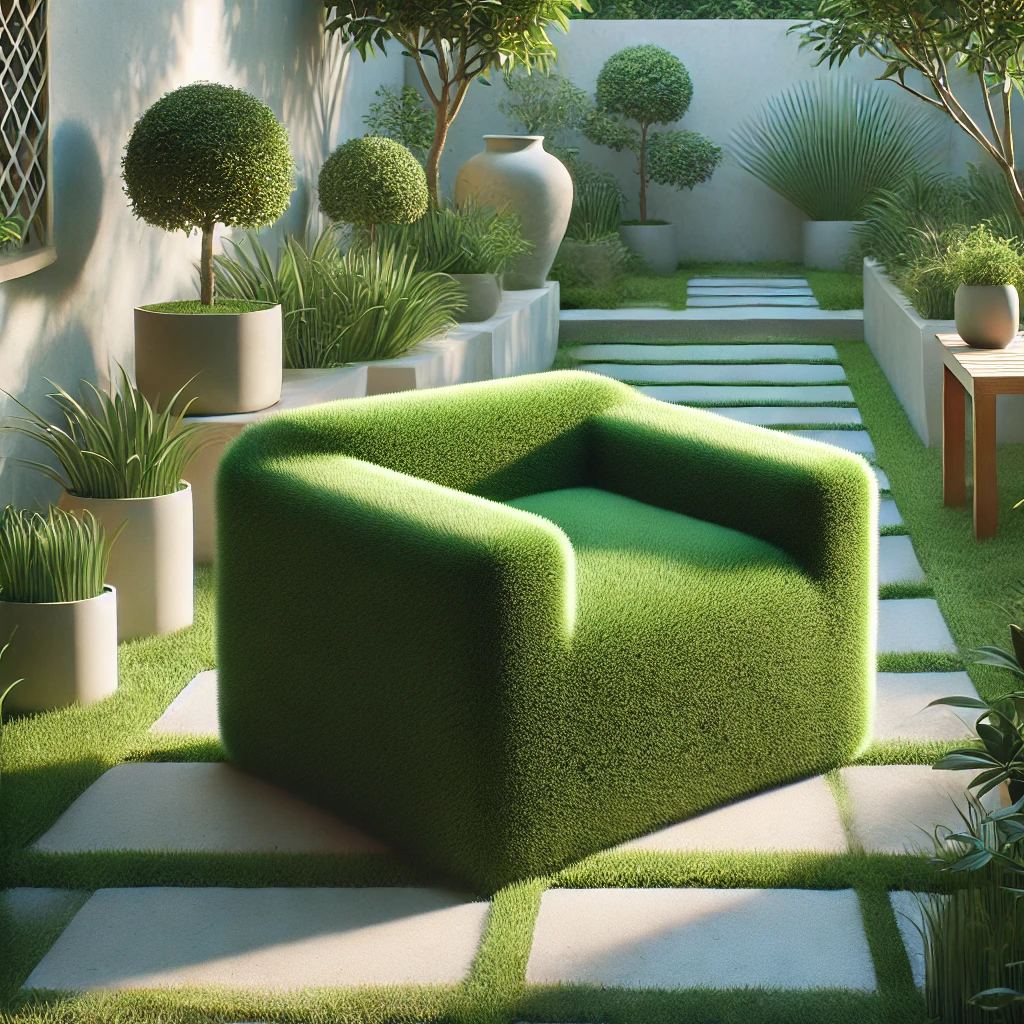
Put a green grass chair on a neutral or contrasting outdoor rug to create a seating area. Choose rugs made from durable fibers like polypropylene to prevent spills. Add planters with ornamental grasses or succulents to match the chair’s texture.
Layered lighting
Use string lights, solar path lights, and a small task lamp near a reading chair to extend evening use. Low-level solar lights outline paths between zones. A focused lamp near a side table makes garden seating useful after dusk.
Color and material palette
Pair a green grass chair with natural wood tones, terracotta accents, and muted neutrals for a relaxed look. Add complementary blues to add cool contrast. Use warm ochres or soft coral for accent pillows to balance the green and add warmth.
Zoning for purpose
Create a conversation area with two grass chairs and a compact side table. Place a grass lounge chair with an ottoman for a solo lounging spot. Use a sculptural grass couch chair against a vertical garden or water feature to form a visual focal point.
Outdoor living essentials checklist
- Define each zone with outdoor rugs sized to fit seating arrangements.
- Include planters to tie leafy textures to your garden seating.
- Add layered lighting so zones work day and night.
- Choose cushions and textiles rated for outdoor use to keep color and comfort.
When these elements work together, your backyard decor feels intentional. The result is a cohesive outdoor space that highlights the grass chair and supports relaxed, functional outdoor living.
Outdoor Seating Accessories to Enhance Your Grass Chair
Choose accessories that boost comfort and protect your grass chair while keeping style simple. Start with a plan for seating, shade, and storage so every piece works together. These additions extend life and make outdoor seating more inviting.

- Cushions with quick-dry foam inserts and Sunbrella or similar outdoor fabrics upgrade comfort at once. Pick removable covers for easy washing and store cushions in a waterproof box when not in use. Weatherproof throws help on cool evenings and add texture without damaging turf finishes.
- Small side tables in recycled aluminum or teak keep drinks and books close by. Clip-on umbrellas and shade sails protect synthetic grass surfaces from prolonged sun exposure and keep seating cooler. Modular ottomans that double as storage give a clean profile and extra function for small patios.
- Use fitted, breathable protective covers to reduce mold and trap less moisture than non-breathable tarps. Custom-fit turf covers shield the grass finish during heavy storms or long storage periods. Slip-on winter liners and elevated bases cut ground dampness and help fragile cores last through wet seasons.
Set a simple maintenance schedule: air out cushions weekly, wipe frames and turf monthly, and inspect seams each season. Keep a waterproof storage box for cushions and a set of spare removable covers for quick swaps after messy gatherings.
When choosing pieces, favor sustainable furniture choices like recycled textiles and FSC-certified teak. Thoughtful selections of cushions, protective covers, modular ottomans, and other outdoor accessories keep a grass chair comfortable and durable for years of backyard use.
Conclusion
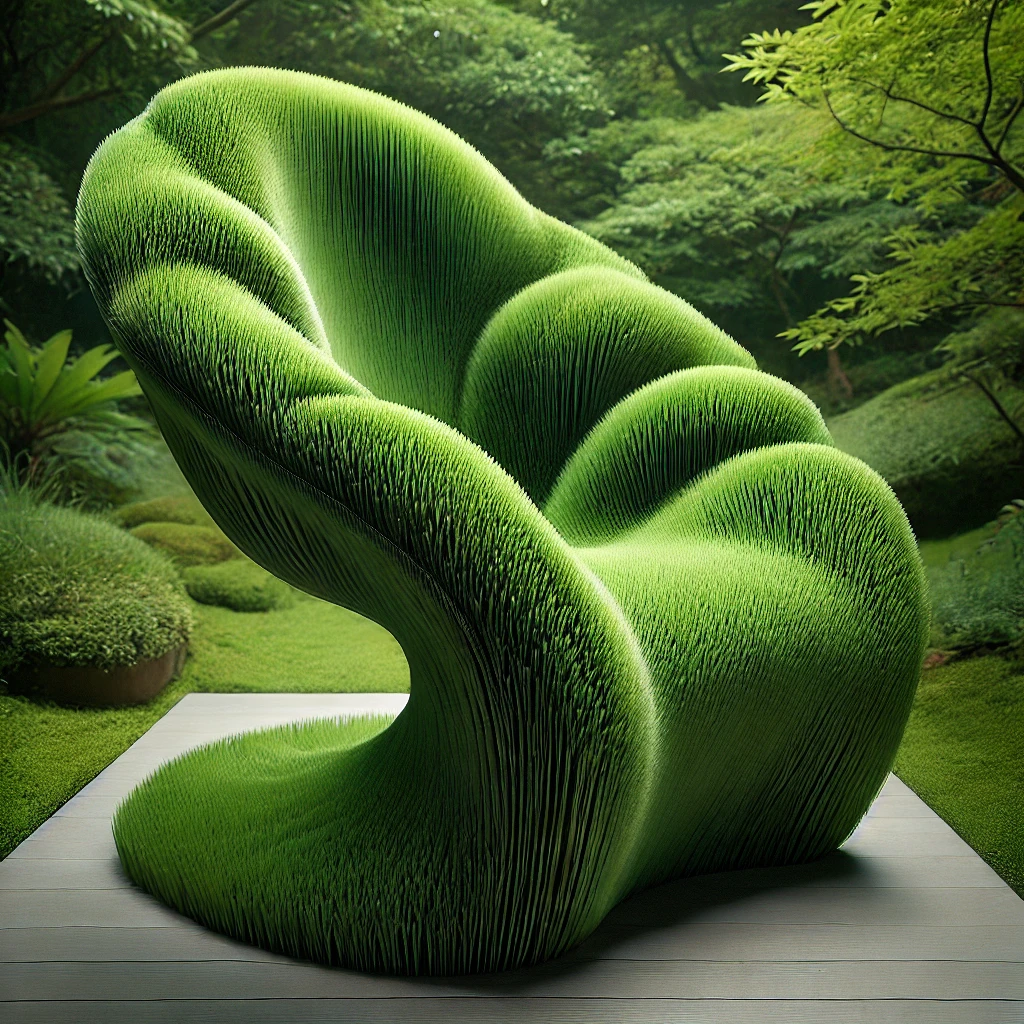
Grass chairs bring a new look to outdoor living in 2025. They mix style with eco-friendly production. You can find everything from simple cardboard chairs to fancy woven ones for your backyard. When picking outdoor seating, think about comfort, how long it lasts, if it’s good for the planet, and the price. It’s smart to see and touch the materials before buying. This helps ensure it fits your needs and lasts in your climate.
Start by narrowing down your choices to a few options. Look at their size, style, and eco-friendliness. Make sure to check if they come with a good return policy. Or, try making your own turf chair to see if it’s right for you. Choosing wisely will make your grass chair a key part of your outdoor space and a symbol of eco-friendly living. Illuminate your green oasis with a weeping willow chandelier for evening gatherings.
FAQ
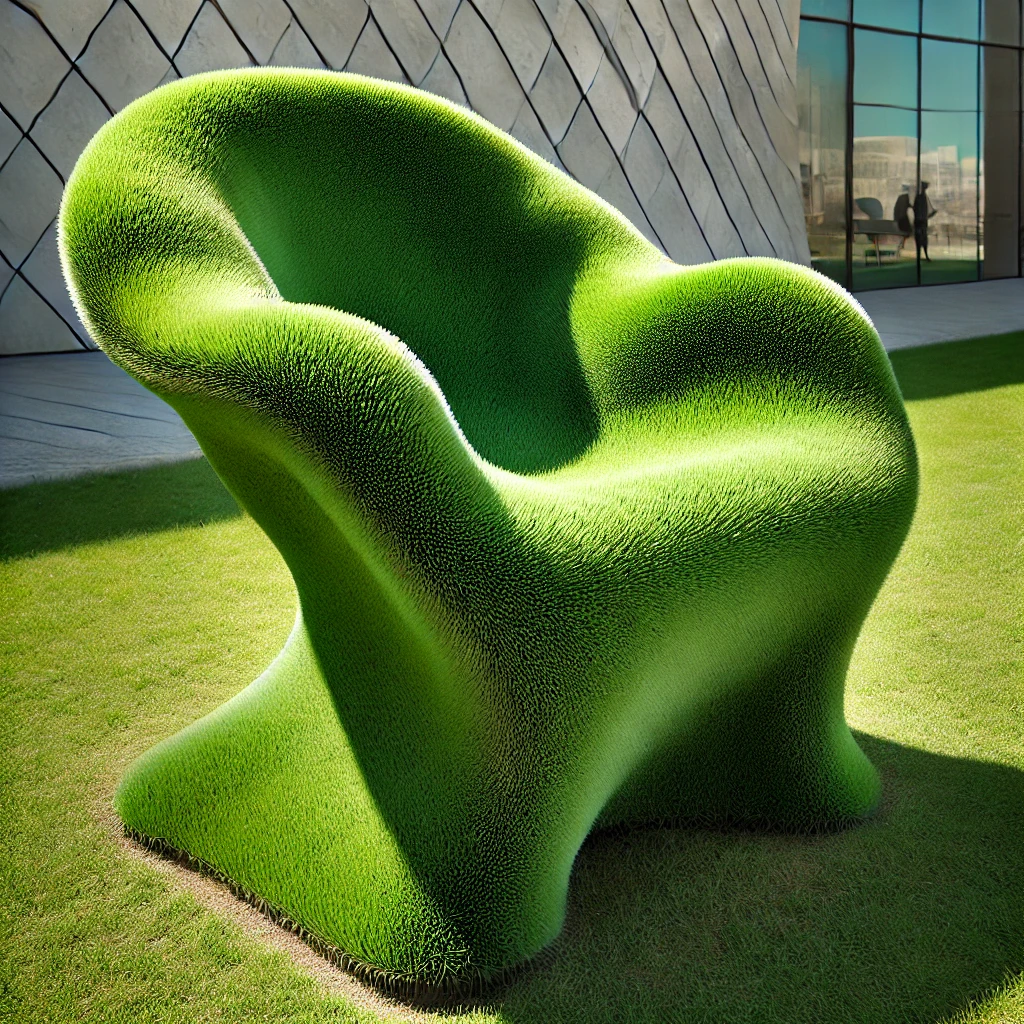
What is a “grass chair” and why are they trending for 2025?
A grass chair is outdoor seating covered in artificial turf or natural grass. They’re popular in 2025 because people want furniture that’s good for the planet. Brands like IKEA and West Elm are making more eco-friendly options.
What types of materials are used in modern grass chairs?
Modern grass chairs use recycled plastic, foam, and natural fibers. They also have frames made from aluminum, wood, or composite materials. Some even use ocean plastics or latex for extra greenness.
Are grass chairs durable and weather-resistant?
It depends on the chair. High-quality ones can handle sun and rain. But, cardboard chairs are best for covered spots or temporary use.
How comfortable are grass foam chair designs compared with woven or traditional lawn chairs?
Grass foam chairs are comfy and dry fast. Woven ones are breathable and durable. Traditional chairs are cheaper but less comfy.
Can grass chairs be eco-friendly and recyclable?
Yes, many are made from recycled materials and have low emissions. Look for certifications like Global Recycled Standard (GRS) and FSC. Some are even biodegradable.
How should I care for and clean a grass chair?
Keep them clean by brushing off dirt and using mild soap. For stains, try enzymatic cleaners. Store cushions and inserts to keep them dry.
Are cardboard grass chairs a good budget option?
Cardboard chairs are cheap and recyclable. They’re good for short-term use or DIY projects. But, they’re not weatherproof.
Which grass chair style works best for small balconies or patios?
Look for small, foldable chairs for tight spaces. Turf seat pads and rugs can also save room. Check the size and weight before buying.
What accessories improve longevity and comfort for grass chairs?
Use waterproof cushions and covers to protect them. Ottomans and side tables can add comfort. Shade sails and umbrellas help with UV protection.
How do I choose the right grass chair for my climate (e.g., coastal, humid, cold)?
For sunny areas, choose UV-stable turf and durable frames. In humid places, pick mold-resistant materials. For cold, use insulated covers and store indoors.
Where can I buy sustainable grass chairs or find independent makers?
Check Crate & Barrel, West Elm, and Wayfair for eco-friendly options. Etsy and local fairs have unique, handmade chairs. Always check seller ratings and material specs.
Can I DIY a grass chair or refresh existing outdoor seating with turf?
Yes, you can make a cardboard chair or update old furniture with turf. Use green rugs and cushions for a similar look without the cost.
What certifications and labels should I look for when buying a grass chair?
Look for FSC, Global Recycled Standard (GRS), and GREENGUARD. These show the chair is eco-friendly and made with care.
How do grass woven chair styles compare to synthetic turf finishes?
Woven chairs have a natural look but need more care. Synthetic turf is easy to clean and lasts longer. It’s a matter of style and maintenance.